Latest tax updates and 3 key tax benefits for clients
This content is categorized as:When it’s time to think about annual income taxes, there’s a lot to keep in mind. As you work with clients, remember tax-advantaged products like fixed indexed annuities. What is a fixed indexed annuity (FIA)? Understanding the basics can help you explain their value. Not only can FIAs offer tax benefits, they may help clients save more for retirement.
Stay current on annual tax changes
As you think through the considerations, current tax code changes are an important part of the mix. Our annual tax reference guide and tax tables can help simplify, and potentially save you time, searching for the latest updates.
Quick access: Tax reference guide & tax tables
You’ll find current tax rates, contribution limits and more vital tax information in the Tax Reference Guide and Tax Tables.


As you find out what’s new and look for ways to help your clients, consider other tax-advantaged vehicles that could be worth discussing.
Tax-advantaged products to help support retirement planning
Most clients are probably familiar with 401(k)s and IRAs, but there are other tax-advantaged retirement products that can help support strategies for tax-efficient retirement income, especially for clients with non-qualified assets. A fixed indexed annuity funded this way combines growth potential and protection from market downturns with tax benefits that can complement other financial vehicles. Consider reviewing FIA basics and accumulation features with clients who may not be familiar with how they work.
3 key (and often overlooked) tax benefits of FIAs
Here are three tax benefits a FIA can offer:
1. No contribution limits for non-qualified funds
While qualified plans like 401(k)s and IRAs offer tax advantages, they also cap how much money can be contributed each year. Without IRS-imposed contribution limits on non-qualified funds, FIAs may appeal to clients who have maxed out their annual 401(k) and IRA contributions. It’s worth noting, there may be contribution limits with a FIA, depending on the specific product.
2. Tax-deferred growth potential
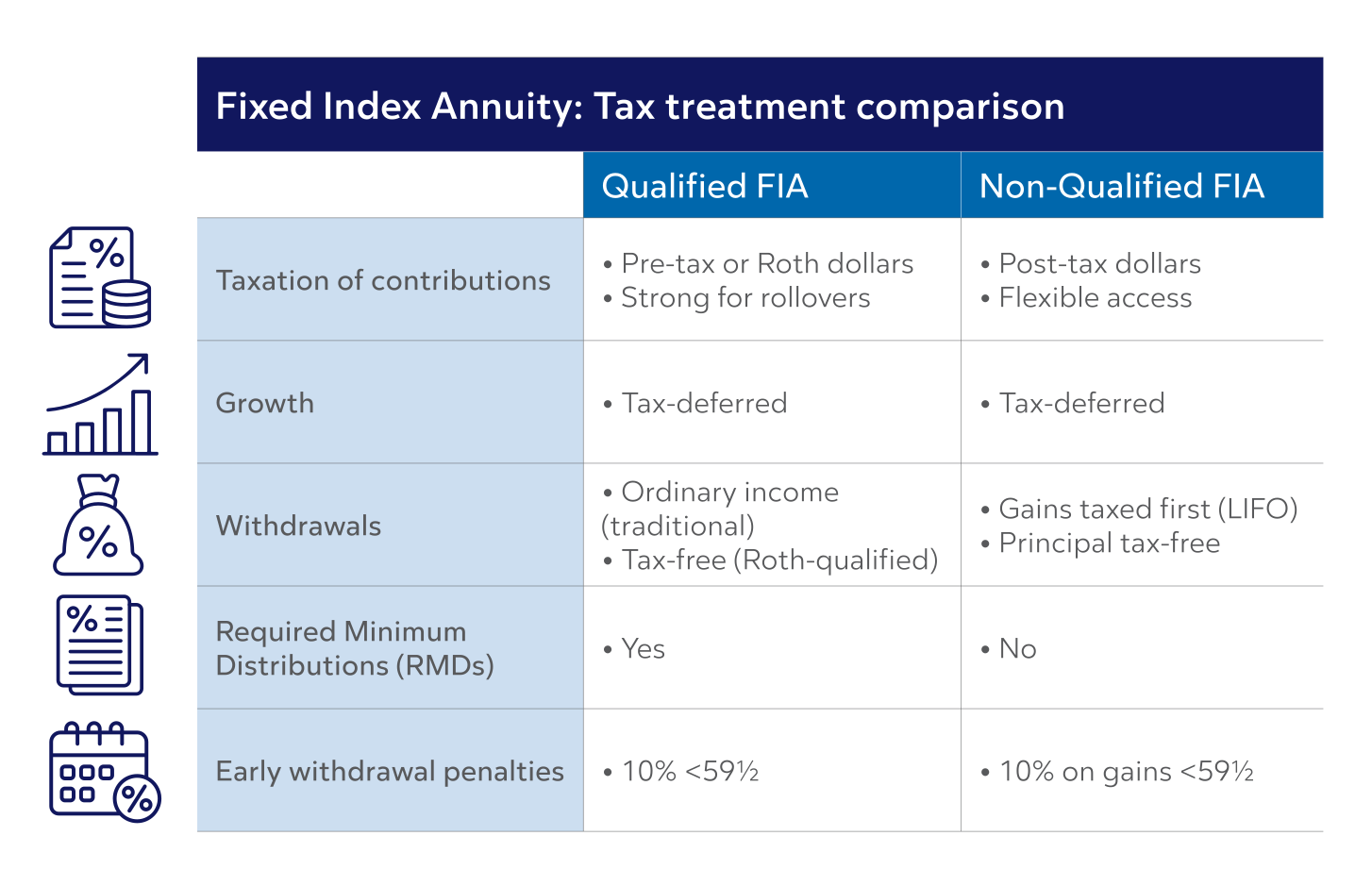
With interest credits tied to the performance of a stock market index, FIAs give clients the potential to benefit from index gains without investing directly in the market. The growth within the FIA is not taxed until it’s withdrawn, similar to retirement savings vehicles such as 401(k)s and Traditional IRAs. Because FIAs can also help protect retirement savings from market downturns, there is less downside risk than 401(k) or IRA assets that are invested directly in the market. (There are no additional tax benefits to purchasing a FIA with qualified money.)
3. Favorable tax treatment for retirement income
Withdrawals from qualified 401(k)s and Traditional IRAs are taxable. However, clients only pay taxes on interest earned in their FIA funded with non-qualified money. Since this income may include both interest and a return of the client’s original premium, only a portion of the FIA distribution may be taxable. This feature can offer flexibility when coordinating non-qualified FIA income with other taxable sources of retirement income.
Important FIA tax considerations
- FIAs funded through a rollover from a tax-qualified vehicle are subject to the same tax rules as an IRA or a 401(k).
- Like a 401(k) and IRA, a FIA may be subject to federal and state income tax and, except under certain circumstances, will be subject to an IRS penalty if payments start before the annuity owner reaches age 59 ½.
- Taking more than the allowed free withdrawal amount may lead to a withdrawal charge or a possible market value adjustment, which could result in the loss of principal.
FIA tax benefits FAQs
Q1: What tax benefits do fixed indexed annuities provide?
FIAs funded with non-qualified money offer tax-deferred growth, no IRS contribution limits and flexibility in how withdrawals may be taxed.
Q2: Are FIA withdrawals taxable?
Withdrawals from non-qualified FIAs are taxed only on interest earned, not the original premium. Traditional Qualified rollovers are fully taxable upon distribution.
Q3: Can clients use FIAs alongside qualified plans like a 401(k)?
Yes. FIAs can complement taxable, tax-deferred and tax-free accounts as part of a broader retirement income strategy.
Q4: Do FIAs have early withdrawal penalties?
Yes. Distributions before age 59½ may incur IRS penalties, and withdrawals above the free amount may incur charges, market value adjustments or both.
How this helps your clients
These talking points can help you explain FIA benefits to clients during tax-season conversations:
Money grows tax-deferred
Growth inside a FIA is locked in, and taxes aren’t paid on it until a distribution is taken. Clients aren’t losing any value to an annual tax bill, increasing the potential for growth.
Clients control withdrawal timing
Non-qualified FIAs don’t require clients to take withdrawals at a certain age. This gives them opportunities to take withdrawals when their income and tax bracket may be lower.
Smoother retirement income
FIAs can provide steady, predictable income, helping prevent large income spikes that could push clients into a higher income tax bracket.
How FIAs can support a broader retirement strategy
With their tax benefits and ability to provide growth potential and protection from market downturns, FIAs can play an important role within a retirement savings plan. They can also complement other sources of growth potential and retirement income, including:
- Stocks, bonds and mutual funds held in taxable brokerage accounts
- Savings in tax-deferred accounts like a Traditional 401(k)
- Other tax-advantaged vehicles such as a Roth IRA
Using a mix of these tools and staying current on tax changes for the year can be vital to helping clients manage risk and provide growth potential before and after retirement. For other ideas and tax-efficient strategies to help your clients plan for retirement, visit our Producer Insights Hub.
Insights on Athene Connect. Tips, tools and resources to grow your business by helping clients retire with confidence.
Under current tax law, the Internal Revenue Code already provides tax deferral to qualified money, so there is no additional tax benefit obtained by funding a qualified contract, such as an IRA, with an annuity; consider the other benefits provided by an annuity, such as lifetime income and a Death Benefit.
Any information regarding taxation contained herein is based on our understanding of current tax law, which is subject to change and differing interpretations. This information should not be relied on as tax, legal or financial advice and cannot be used by any taxpayer for the purposes of avoiding penalties under the Internal Revenue Code. We recommend that taxpayers consult with their professional tax and legal advisors for applicability to their personal circumstances.